
Are We Headed Toward an Orwellian Geopolitical Dystopia?
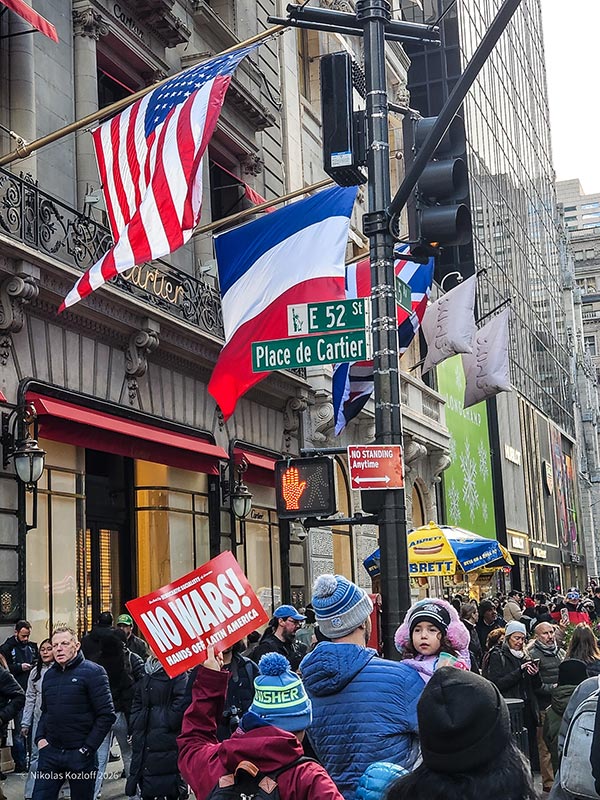
So much for the “rules-based” international order: in the span of just a few short weeks, Donald Trump has invaded Venezuela and, for good measure, threatened to annex the Danish territory of Greenland. This in turn stands to wreak devastating diplomatic consequences for NATO and the transatlantic alliance set in place for the past eighty years. Though Greenland is technically not a member of the alliance, the island forms part of NATO through Denmark. For the moment, Trump has backed off threats of forcible annexation, though it’s anyone’s guess what the president will try next.
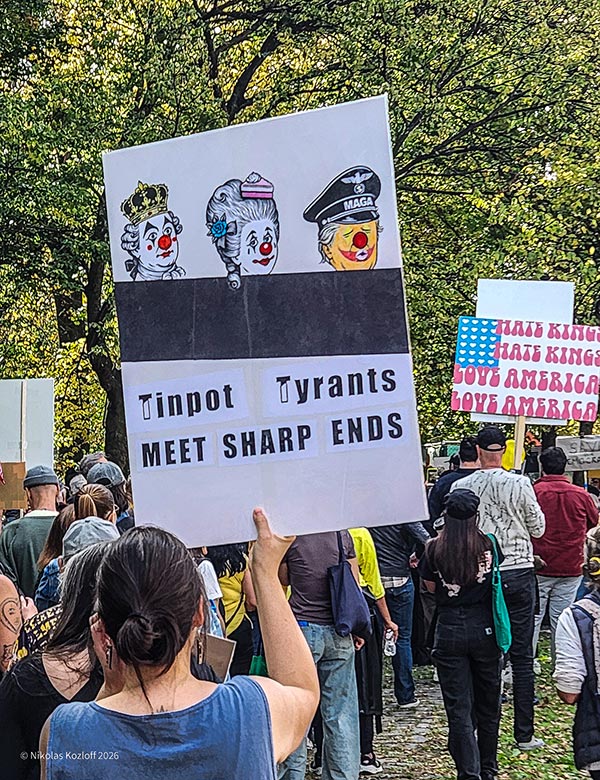
Even as he seeks to shred and dismantle the very fabric of the postwar world, Trump yearns to turn back the clock to a bygone age of imperialism, thereby returning to the idea of great powers carving up the world into separate “spheres of influence.” Given the sheer human toll wrought by both World Wars I and II, it is jarring that territorial expansion and anachronistic notions which should have been consigned to the dustbin of history are now seemingly back in vogue.
In light of Trump’s actions, perhaps we need to entertain reports that, under normal circumstances, would have seemed fantastical or even conspiratorial. Fiona Hill, a Russia adviser during Trump’s first term, claims the Kremlin offered to cease its support for Nicolás Maduro in Venezuela in exchange for a “free hand” in Ukraine. In an uncanny echo of Trump’s own bombastic statements, Hill says the Russians pushed the idea through articles in Russian media which referred to the Monroe Doctrine, a nineteenth century principle designed to keep Europeans out of America’s “back yard.”
When he invaded Venezuela, Trump pointedly used the Monroe Doctrine to justify military action. Coincidence? Hill remarks that Putin will be “thrilled” with the notion that large countries may act with impunity within their respective spheres of influence, since this reinforces underlying realpolitik. Moreover, since everything is now considered a zero-sum game, Trump’s gambit in Venezuela undermines the moral authority of Kyiv’s allies which seek to deter Russian aggression in Ukraine. For his part, Putin hasn’t commented on Trump’s invasion of Venezuela, though the Russian Foreign Ministry issued a tepid rejoinder, blandly condemning U.S. “aggression.”
Even more strikingly, the Kremlin exercised remarkable restraint when Washington seized a sanctioned oil tanker in the Atlantic flying the Russian flag. Though the Russian Ministry of Transport issued a statement on the matter, Putin again chose to remain silent. Observers believe Russia is holding back in the Western Hemisphere, since all foreign policy is being subordinated to wider Kremlin goals in Ukraine. Though Putin might have been able to challenge Maduro’s capture in Venezuela, this would have risked escalation with Trump.
For all intents and purposes, it seems as if we could be witnessing the emergence of a latter-day Molotov-Ribbentrop pact in which Trump and Putin divvy up global spoils. In this scenario, the U.S. gets carte blanche in the Western Hemisphere, while Russia is allowed to expand in Ukraine. This hardly bodes well, since the secret Molotov-Ribbentrop non-aggression treaty carved up Poland and assigned separate spheres of influence in Eastern Europe to both Nazi Germany and the Soviet Union. When Hitler invaded Poland in September 1939, Soviet troops invaded from the east and the country was partitioned.
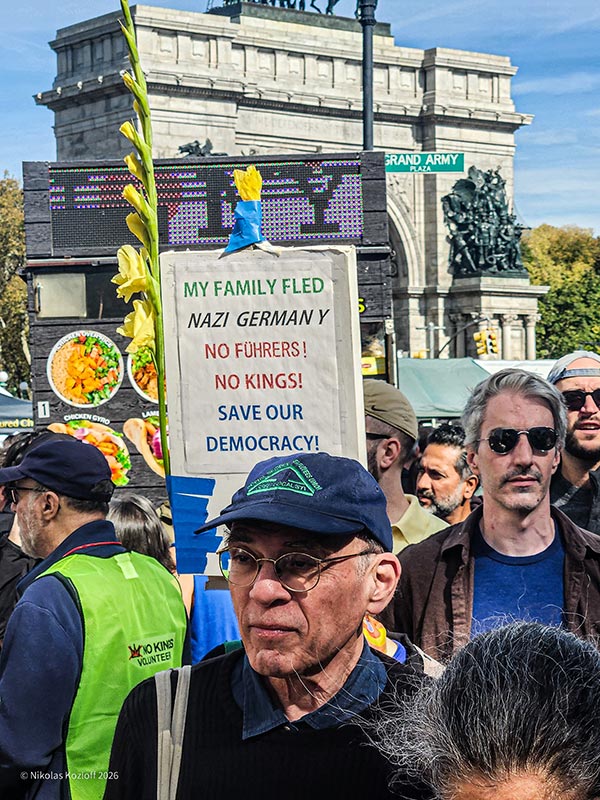
Experts believe the Molotov-Ribbentrop pact was arguably “the most dreadful episode in the diplomatic history of the 20th century,” since “peaceful countries and their millions of inhabitants were consigned to the meat-grinder.” In short order, the deal between Hitler and Stalin “led directly to the annexation of the Baltic states into the Soviet Union, the unprovoked Soviet attack on Finland, the dismemberment of Poland and Romania, and the institution of totalitarian rule in most of the region, with all the accompanying death and devastation.” Hitler meanwhile regarded the Molotov-Ribbentrop pact as a “tactical and temporary maneuver” which he had no intention of upholding. Indeed, two years later, the Nazi leader attacked the Soviet Union in Operation Barbarossa, thus ending the treaty.
To its shame, Russia has not come to terms with its infamous role regarding the Molotov-Ribbentrop pact. In fact, the agreement remained a taboo subject in the Soviet Union until 1989, when the Congress of People’s Deputies finally condemned the pact. Boris Yeltsin, Russia’s first democratically elected president, later ordered declassification of secret protocols. Though Putin stated in 2009 there were “grounds to condemn the pact,” he later reversed himself by claiming the agreement was “necessary for Russia’s survival.” Ridiculously, Putin the amateur historian even blamed Poland for the outbreak of World War II. When the Organization for Security and Co-operation in Europe (OSCE) condemned both communism and fascism for inciting World War II and called for a day of remembrance for victims of both Stalinism and Nazism, Russian lawmakers retaliated by threatening “harsh consequences” against the OSCE.
What is more, in modern Russia any hint the Soviet Union behaved unscrupulously in the run-up to war is regarded as heresy. Indeed, the Molotov-Ribbentrop pact is frequently depicted in a positive or neutral light in the media and in textbooks. In any case, Russian nationalists argue, didn’t other countries make agreements with Hitler? While it’s true Britain and France struck a deal with Germany over Czechoslovakia in 1938, the agreement is now regarded with deep shame since this was associated with appeasement. Russia, however, has chosen to ignore Soviet ties to Hitler’s Germany prior to 1940.
The notion that we could be headed back toward an era of underhanded and secret international deals such as the Molotov-Ribbentrop pact should certainly be cause for concern, yet perhaps we were forewarned. Though George Orwell’s 1984 is most widely known for its depiction of internal political repression and paranoia, the book also presented a merciless vision of geopolitics in which three powers, Oceania, Eurasia and Eastasia, held sway. Within this dystopian scenario, all states remained perpetually at war, though sometimes powers switched sides for no apparent reason, with leaders propagandizing the “proles” by claiming “we have always been at war with Eastasia.”
Orwell himself wrote against the backdrop of reports laying bare Moscow and Berlin’s nefarious non-aggression pact. Then, just like in 1984, the Soviets abruptly switched sides to join the allies. In 1943, Roosevelt, Stalin and Churchill met in Teheran, and reports about the three carving up the post-war world into separate spheres influenced Orwell’s thinking. Two years later, the writer ridiculed leftists backing Chiang Kai-shek, a figure who had thrown in his lot with the allies, though the statesman had previously sought to wipe out the Chinese Communist Party.
Though Orwell depicted a fictional world, some may wonder whether the U.S., Russia and China may now seek to carve up the world into spheres of influence in an eerie echo of 1984. For now, Putin seems wary of challenging the U.S. in the Western Hemisphere as evidenced by recent events. The Kremlin is clearly distracted by the war in Ukraine, which has eroded Putin’s influence in former Central Asian Soviet republics, as well as the Caucasus and Moldova. The fall of Bashar al-Assad’s regime in Syria dealt a further blow to Russian stature. As if to compensate for tarnished prestige in Venezuela, Putin recently launched a hypersonic missile attack on western Ukraine, located just over the border from NATO member Poland.
For now, the world has avoided a major superpower conflagration, but for how long? Some believe the three great “revanchist empires” won’t be able to stay out of each other’s sphere of influence indefinitely. Indeed, Trump has reserved the right to act unilaterally far outside the traditional U.S. sphere of influence, by bombing Iran or running Gaza, for example. Meanwhile, even though Trump has warned other powers to stay out of the Western Hemisphere, he is unlikely to simply allow China to run roughshod in the Asia-Pacific. While it may be expedient for great powers to cut secret deals in the short term, tensions will inevitably escalate as evidenced by the case of the Molotov-Ribbentrop pact. In this sense, reality echoes Orwell’s dark vision, since alliances between the likes of Oceania, Eurasia and Eastasia are unlikely to endure within a constant state of war.
Leave a comment